Bit #10: Radical System Change: Bitcoin & Degrowth — Issue #3
Originally published on Medium on May 18, 2022.
This issue’s topic: Green Keynesianism is still consumption-based growth.

Just thoughts on the connection between bitcoin and elements of the “degrowth” movement that argues that never-ending economic growth is leading us toward an unsustainable and ecologically destructive path.
Many people in bitcoin are familiar with Keynes, and Rothbardesque libertarians especially dislike Keynes. As John Nash had noted, Keynes had many sides and not everything he wrote was wrong.
Today, there’s an interest in reviving and updating Keynesian economic ideas to resolve the errors of a system that has fueled economic, climatic and ecological crises. The leading international left progressive organization, Progressive International, founded by Yanis Varoufakis, is a major proponent of Green Keynesian economics.
What is Green Keynesian economics, then? For this, I am pulling heavily from a book called, Prosperity without Growth: Economics for a Finite Planet, by Tim Jackson and in particular, chapter 7.
The key assumption of Keynesian economics is this:
[F]iscal stimulus is funded by increasing the national debt (deficit spending). This is justified because such spending stimulates growth through a ‘multiplier’ effect. By growing consumption (and incomes) now, governments can pay off the debt through higher tax revenues in the future.
The Green Keynesian approach would be to recognize that debt is inevitable as part of the existing system, so we should use it to fund things that are useful. In fact, this is also what proponents of Modern Monetary Theory argue (which overlaps with Keynesian ideas and chartalism — a theory that the says origin of money is through state fiat). Many progressives like this idea, because it means the government can fund projects that benefit people without having to balance the budget.
This was the foundation of the Great Depression’s New Deal, what Jackson calls a “classic Keynesian public spending programme”. Jackson acknowledges that the long term effects of the New Deal was “enormous”. However, at the time, there was concern over a debt-backed stimulus and there is debate whether this went far enough to meet Keynes’ real objective of deficit-spending.
It is generally understood that the massive war spending from the period through war bonds, expanding the income tax (did you know that income tax was a thing only for the rich prior to World War II?), foreign loans, and government’s direct investment in production, is what recovered the economy and set it back on a path of growth. Either way, the New Deal program is also the foundation of the 21st century’s Green New Deal, the centerpiece of the Green Keynesian platform.
According to Jackson, this can be problematic because the existing public sector is already heavily in debt. He notes, “And increasing this exposure, particularly if it’s achieved through greater external debt, could be costly later.” He notes that at minimum, it would take decades to recover from a rapid rise in debt.
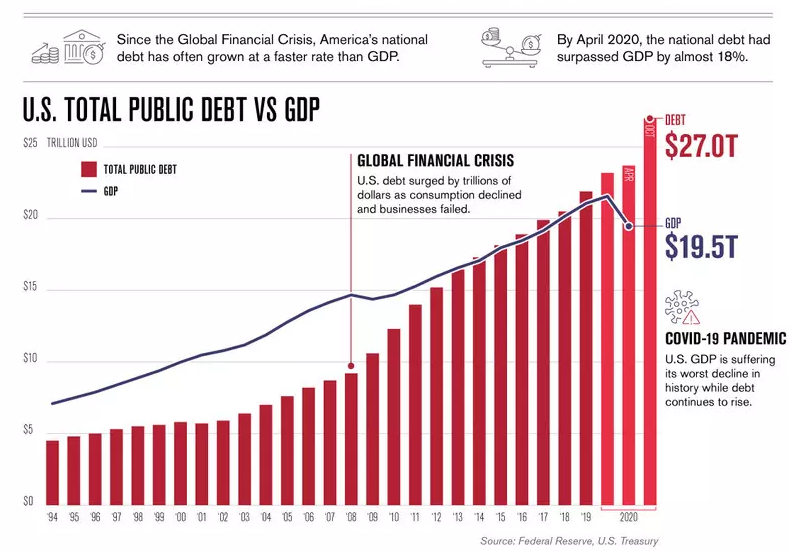
Jackson also notes that conventional debt markets could reach saturation (tipping credit markets into default and panic) and that some governments could fail in its ability to fund conventional debt. So there’s real problems with debt-fueled growth. He suggests that green bonds could be an alternative form of funding, which will likewise encourage saving (solving Keynes’ “paradox of thrift” problem), but this would also require public-sector debt. He highlights a few other possibilities that may be unsavory to certain groups (including Keynesians), such as fiscal tightening through an ecological tax reform and government equity-stake in energy-related assets.
The main problem with Green Keynesianism is that while it may solve some problems in the short-term through green investment, it does not correct the fundamental crisis of the current economic system. The main goal of this approach is to return the economy to consumption-based growth, which is unsustainable. Keynes effectively said, we’ll grow our way out of debt because the debt will be targeted to create future growth payoffs. We have record levels of debt post-COVID stimuli, is it ecologically possible to do this?
Ultimately, under the Green Keynesian approach, we’re still dealing with a debt-based money system. David Graeber was right to point out that money is just a promise. But he and others on the left were wrong to think that we should just hack this idea to our benefit. Graeber never set out to give his readers a clear path toward solutions, his goal had always been to provide an unorthodox perspective to existing strongly held societal ways of being. For all the problematic reasons — which Greaber pointed out in Debt: The First 5,000 Years — and more, rather than exploit the fact that debt currently operates as money, let’s decouple debt and money.
This was a challenging one to write! Thanks for hanging in there with me and making it this far.
Until next time…
