Bit #19: “Is Bitcoin’s Energy Use Ecologically Constrained?”
Originally published on Medium on August 4, 2022.
“Is Bitcoin’s Energy Use Ecologically Constrained?” — Radical System Change: Bitcoin & Degrowth — Issue #11
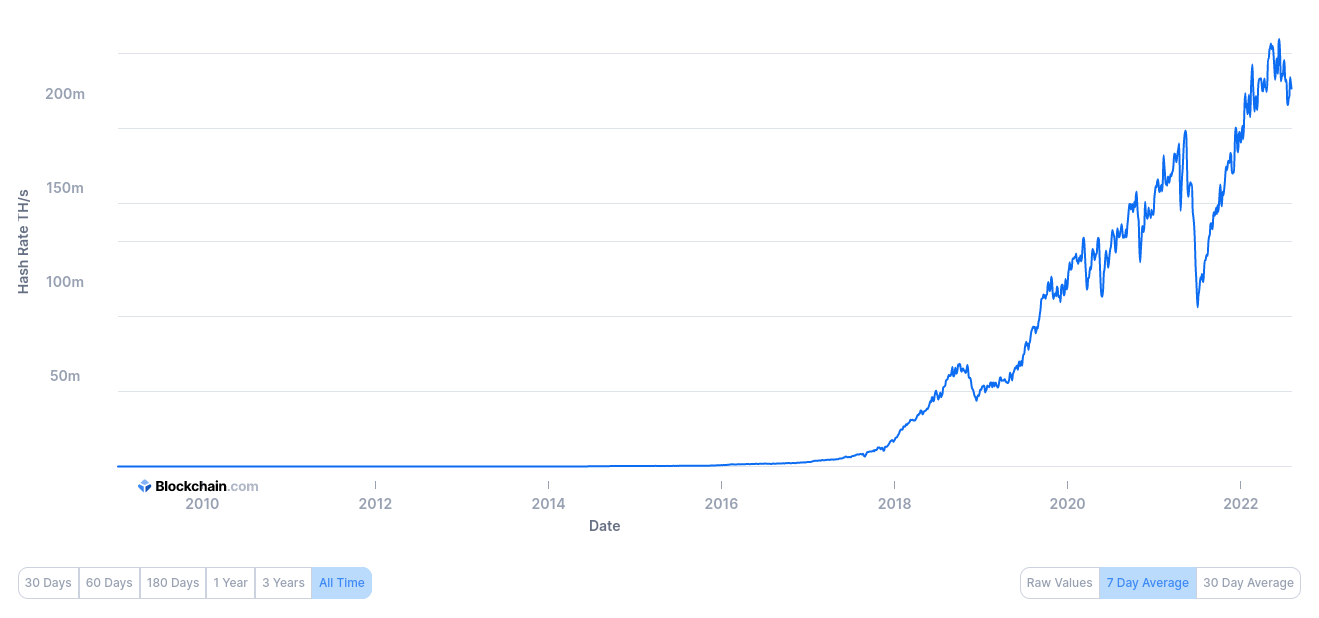
Just thoughts on the connection between bitcoin and elements of the “degrowth” movement that argues that never-ending economic growth is leading us toward an unsustainable and ecologically destructive path.
Bitcoin’s energy consumption is what really gets a lot of bitcoin skeptics’ blood boiling. Thanks to ridiculous claims that bitcoin would use all of the world’s energy by 2020 or that bitcoin will push warming above 2 degrees Celsius all on its own, many people have an unrealistic impression about bitcoin mining.
Several factors go into bitcoin’s energy consumption.
- The overall hashrate
- The network mining difficulty
- The network’s value (the price of bitcoin)
- Available hardware (mineral resources)
- Available power (energy resources)
Since COVID-19 spread across the world, we’ve experienced supply chain issues. If you’ve tried buying a car during the worst of it, you were probably told that it would take months before it would be ready. Turns out cars aren’t created from nothing. Neither are bitcoin mining computers.
An ASIC miner is comprised of a couple of CPU fans, a very boring metal box, and a couple of boring circuit boards with as many ASICs and heatsinks that can possibly fit on the board. The Antminer S19 contains 76 BM1938 ASIC chips. ASIC means Application Specific Integrated Circuit. ASICs are designed to do one task only, unlike your CPU which uses a general-purpose computing integrated chip. These chips are made up of lots and lots of transistors, thanks Shockley for that brilliant invention!
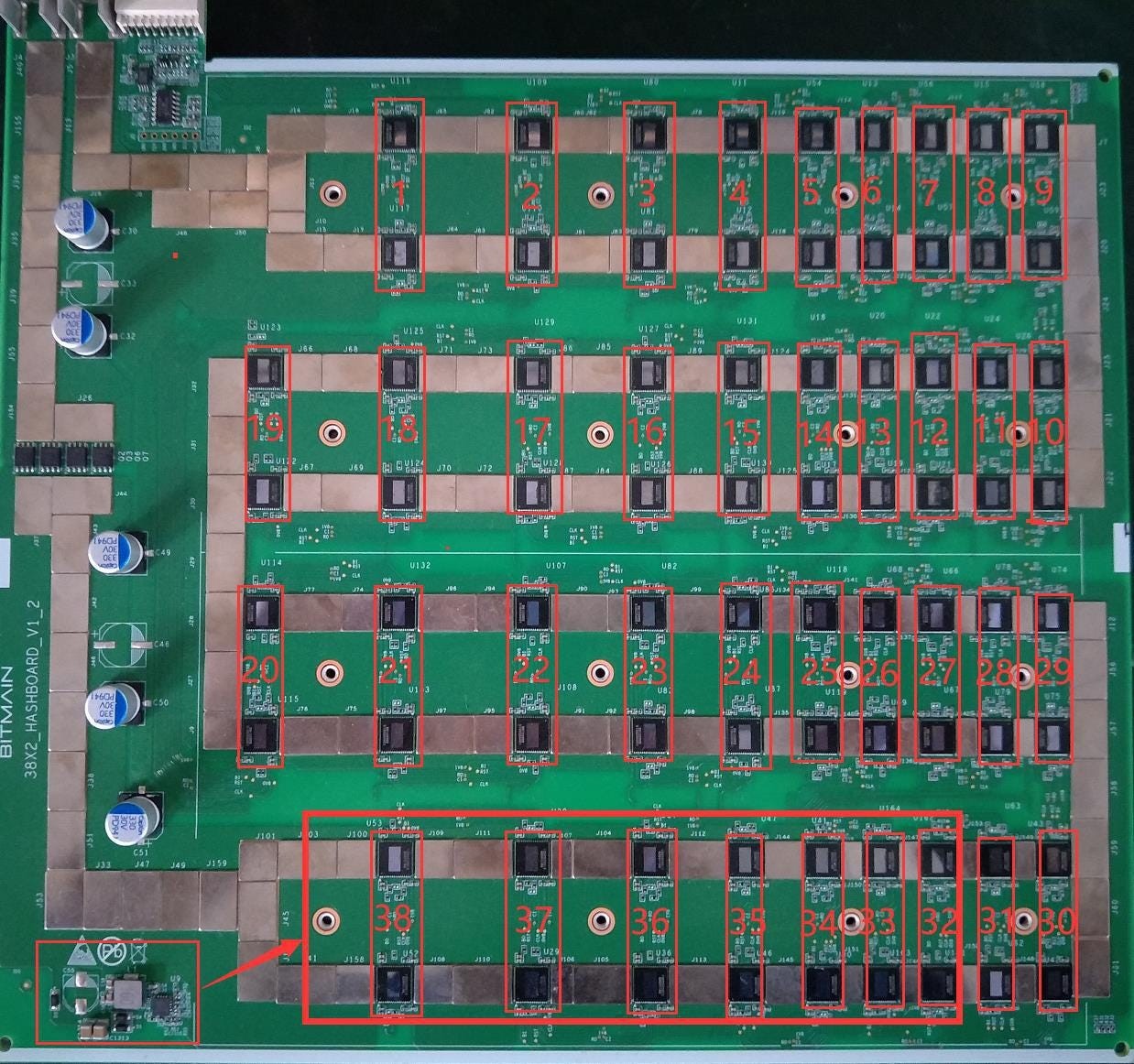
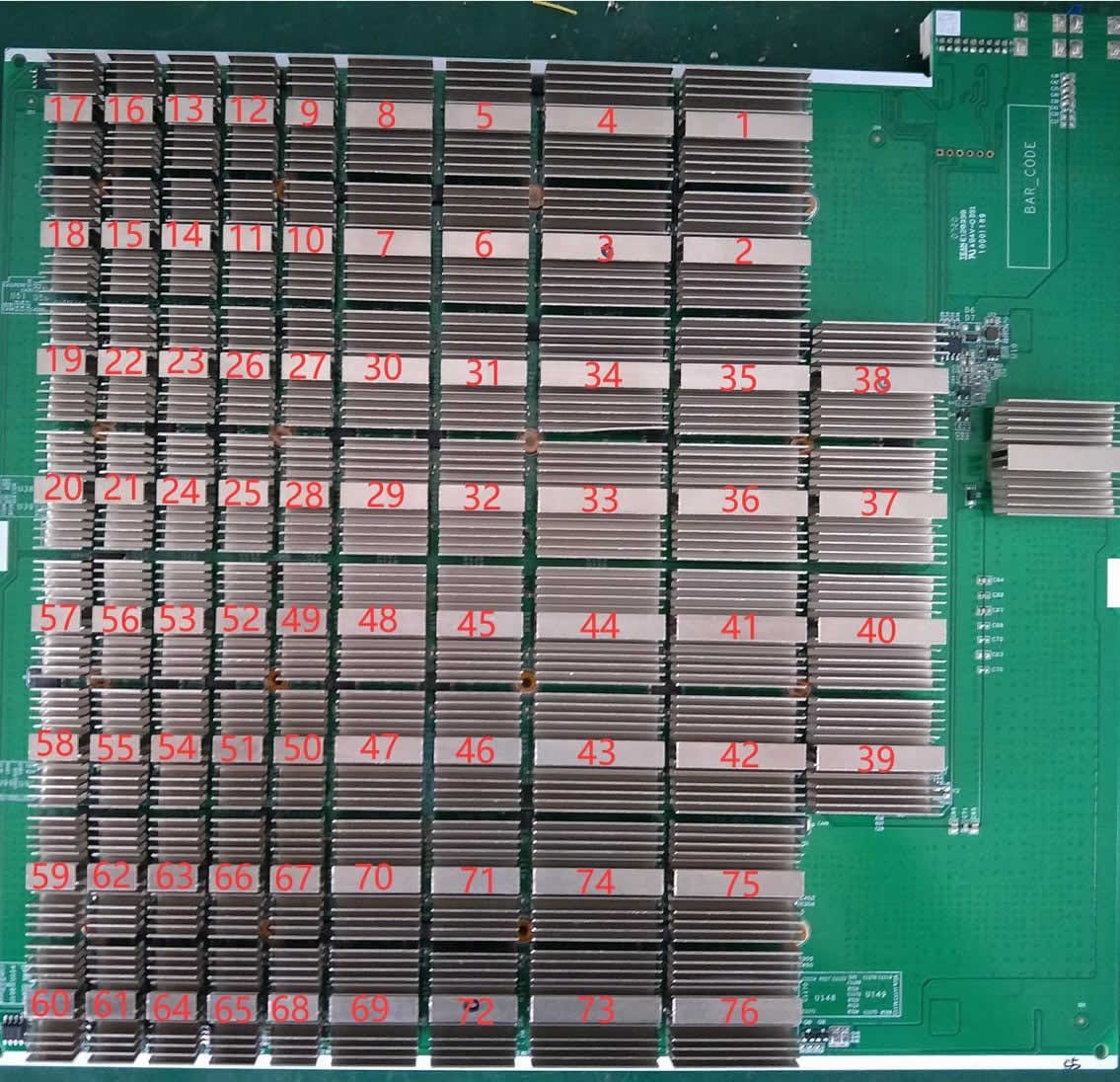
As the reader can see in the above photos, there’s nothing too complicated about these machines. These are standard circuit boards and standard electronic semiconductor components like resistors and capacitors. The fundamental material in chip manufacturing is silicon, derived from silica sand. Due to the simplicity of these devices, they are extremely good candidates for recycling after they’ve been used beyond value and repair.
How many are being recycled right now? I don’t know, I suspect it’s not above the average for electronic recycling in general, but if we were ever to introduce a DDR (German Democratic Republic) incentive for recycling, we’ll probably be able to cure our e-waste problem not just for bitcoin miners, but all of our e-waste. But, I digress…
So, these computers, like new cars, have production and resource constraints. If there is a shortage of any of these parts, there is going to be a shortage of bitcoin miners. This is a mineral resource constraint.
Likewise, if there isn’t enough power available to meet the demand from energy-intensive bitcoin mining operations, then a bitcoin mining data center can’t come online. I suspect that this is much more challenging than many people realize. Bitcoin mining companies can say they want to grow so many megawatts of power use but that doesn’t mean it’s available.
For one thing, it’s not that easy to find a perfectly good site with the right amount of high-power transmission lines already connected to the grid with minimal infrastructure upgrades needed that are all ready to go. For another, if the market goes bearish, the company may not be able to afford to expand as they had originally planned. If you are looking for off-grid power resources, you have to go on the hunt for them. Miners who use flared gas have to go into oil fields and look for suitable sites, it’s not as easy as turning on the light switch in your home or finding a gas station to refuel your car. So there are also very clear power or energy resource constraints.
Bitcoin’s price has to be above the operational and capital costs that go into running a mining operation of any size. In addition, as the hashrate increases, the algorithmically defined difficulty adjusts to make it harder to find a new block. This means that at some point, it becomes unprofitable to add more hashrate so long as the price remains constant. You can think of the difficulty adjustment as a way to zero out mining profits. So not everyone can mine unless they don’t care if they are paying to do it.
Is there an endless growth imperative in bitcoin’s energy use, then? The value constraint is the check on this. What happens when the bitcoin value is held constant? The hashrate has to stop growing when the price forces revenue minus mining expenses to go zero or negative.
This is getting weedier than what is intended for a short newsletter. Needless to say, in my best qualitative and thought experiment conclusion, the deflationary margin coupled with transaction fees will ultimately determine how much more the hashrate grows once the value gains get smaller and smaller as halvings shrink the block subsidy more and more.
Tying this back to ecological economics, let’s say bitcoin becomes the global standard. There are a few ways we could envision this. We could have a bitcoin-exchange standard where currencies are valued in bitcoin (for example, 1 USD could equal 100 satoshis). We could have another scenario where the entire world uses bitcoin only, maybe running on layer two protocols like lightning network. I suspect we’ll have a mix of both, where entities at many scales could issue currencies on the bitcoin network’s layer one and two protocols or use bitcoin directly.
If we’re living in an economic system that targets something other than endless economic growth, then the number of transactions on the network will likely not grow much year-over-year and could reach some steady-state equilibrium as the economy steady-states. This means the transaction fees probably won’t change very much over time. Each currency that is built off of the network can tie its original money creation back to a certain amount of bitcoin, and from this, we can tie that monetary system back to the amount of energy required to secure the systems’ value on the network.
If a specific society finds they need more currency, they’ll need to back it with more bitcoin, which means the society is now holding an increased share of the energy resources. Or, they could devalue their currency to cover more resource use. Either way, this is a direct measurement of resource use. I think this all means that the public ledger can track when an economy’s resource use is changing. This could be a useful check for society.
I want to be clear about all that I’ve written. I haven’t run any models on this, these are just my best qualitative estimates. I think it would be useful to find a way to rigorously explore these theories and see if they hold up. As I said when I started this newsletter, I’m not trying to write the definitive text on bitcoin and degrowth here, I’m exploring ideas and learning as I go when I write these. So, there’s room for fine-tuning and even course correcting in my understanding (and yours).
For now, this is my best quick analysis of whether bitcoin is going to eat up all our resources and destroy society, melt the planet, and make us go extinct. Not likely. Our existing economic system, though. Yeah, we should worry about that.
